Consult





On November 18–19, the 33rd APEC Economic Leaders' Meeting is being held in Shenzhen.
This is the third time China has played host, under the theme "Building an Asia-Pacific Community and Promoting Shared Prosperity."
Before the meeting even began, one piece of news had already spread: throughout the event, all key venues, transport hubs and reception sites are running on 100% green power.
China Southern Power Grid coordinated 89 million kWh of green power resources in advance.
Where do these 89 million kWh come from?
China Southern Power Grid's Shenzhen Power Supply Bureau explained the sources: part comes from the offshore wind power base in Yangjiang, Guangdong, and part from the wind-solar bases in the desert-Gobi-wasteland region of northwest China, delivered over thousands of kilometers of inter-provincial and inter-regional transmission corridors to the venues.
And the Yangjiang base? We know it well.
Part 02.Where do the 89 million kWh of green power come from
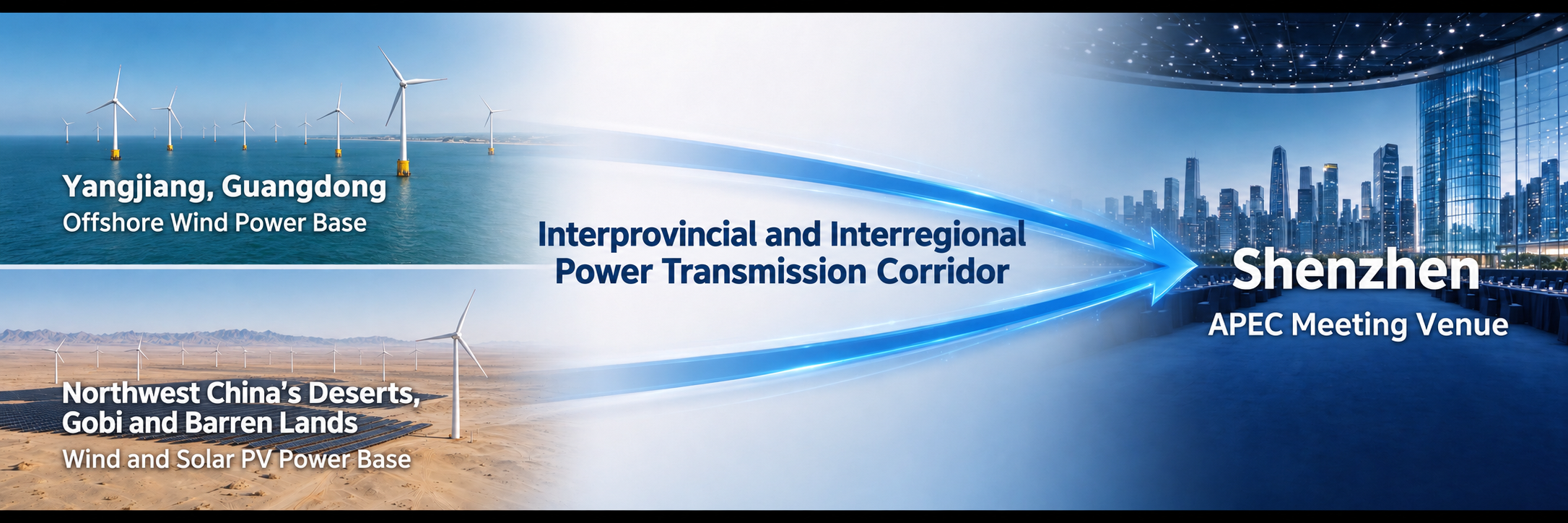
Purchasing green power plus green certificates, walking on two legs, to achieve 100% green power supply across all scenarios.
First, let's be clear about the accounting behind "100% green power."
Many people assume green power is simply the electricity flowing through the wires. It is not.
This time the approach is "green power purchases + green certificates," walking on two legs.
Green power trading settles "where the electricity is bought from," while green certificates settle "who owns the green attributes of this kWh."
A green certificate works like an ID card for green power: one certificate corresponds to a set quantity of green power, and its origin can be traced by scanning a code.
When CCTV visited the APEC press center, a green certificate was on display there, corresponding to a wind farm in Baicheng, Jilin.
Part 03.So what exactly is a green certificate?
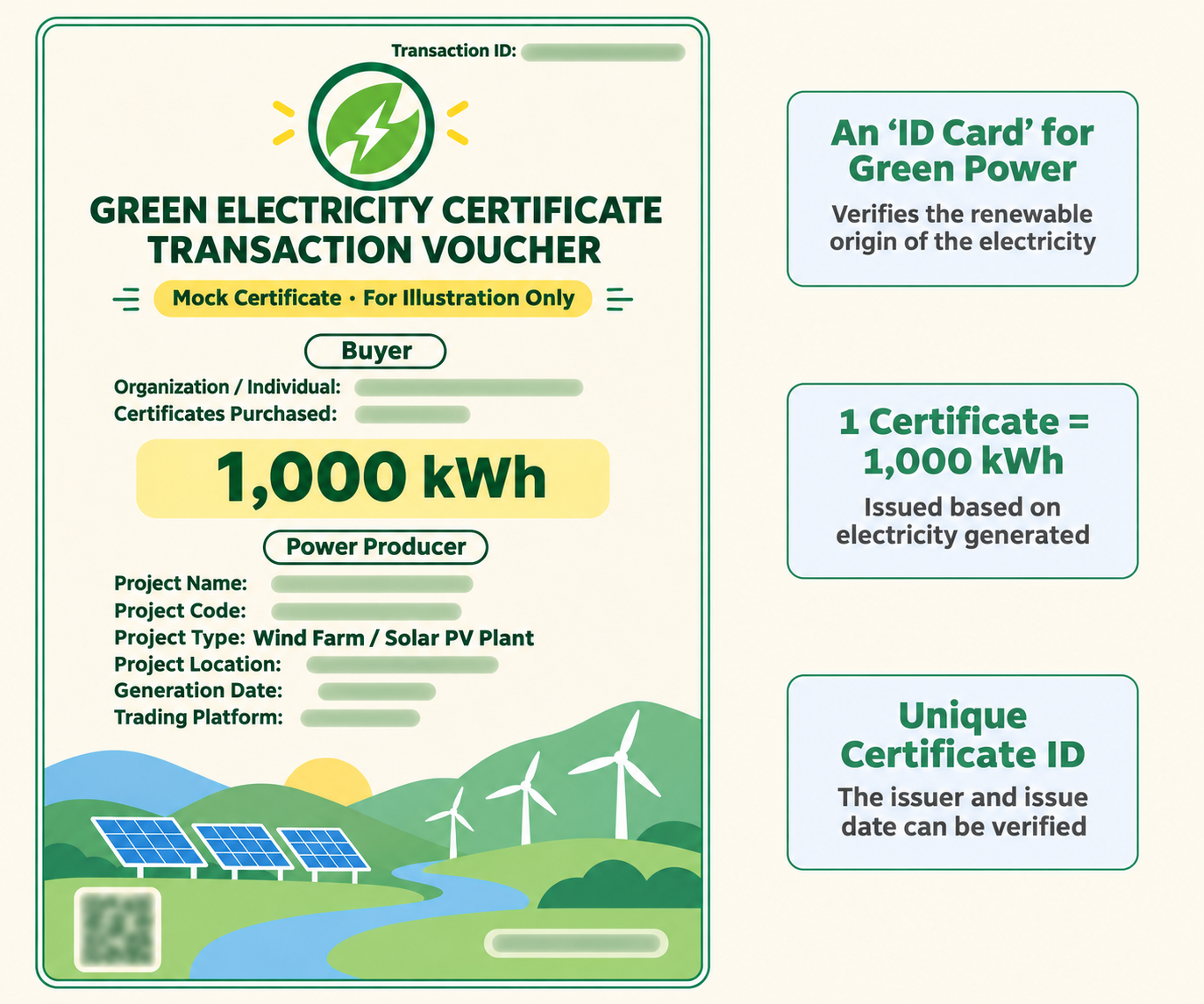
One detail is worth noting: the green power used at the venues is not electricity generated by some particular wind turbine and physically delivered to Shenzhen.
The power in the grid is mixed together, and no one can tell which kWh came from where. Green certificates extract the "green" attribute on its own, turning it into a tradable, traceable credential.
In one sentence: green power is a matter of the "ledger," not the "wire."
The Yangjiang offshore wind power base is a concentrated development across an entire stretch of sea, officially named the "Guangdong (Yangjiang) International Wind Power City."
According to the Guangdong Provincial Department of Science and Technology, the base is planned at over 40 million kilowatts, and the first batch of 10 million kilowatts across 18 projects has all been approved.
From Shapa to Qingzhou, across 5 project clusters, Golead Intelligent's equipment has been running steadily at these sites — the mainstay being inrush suppressors.
Part 04.The Yangjiang offshore wind base — where are our projects
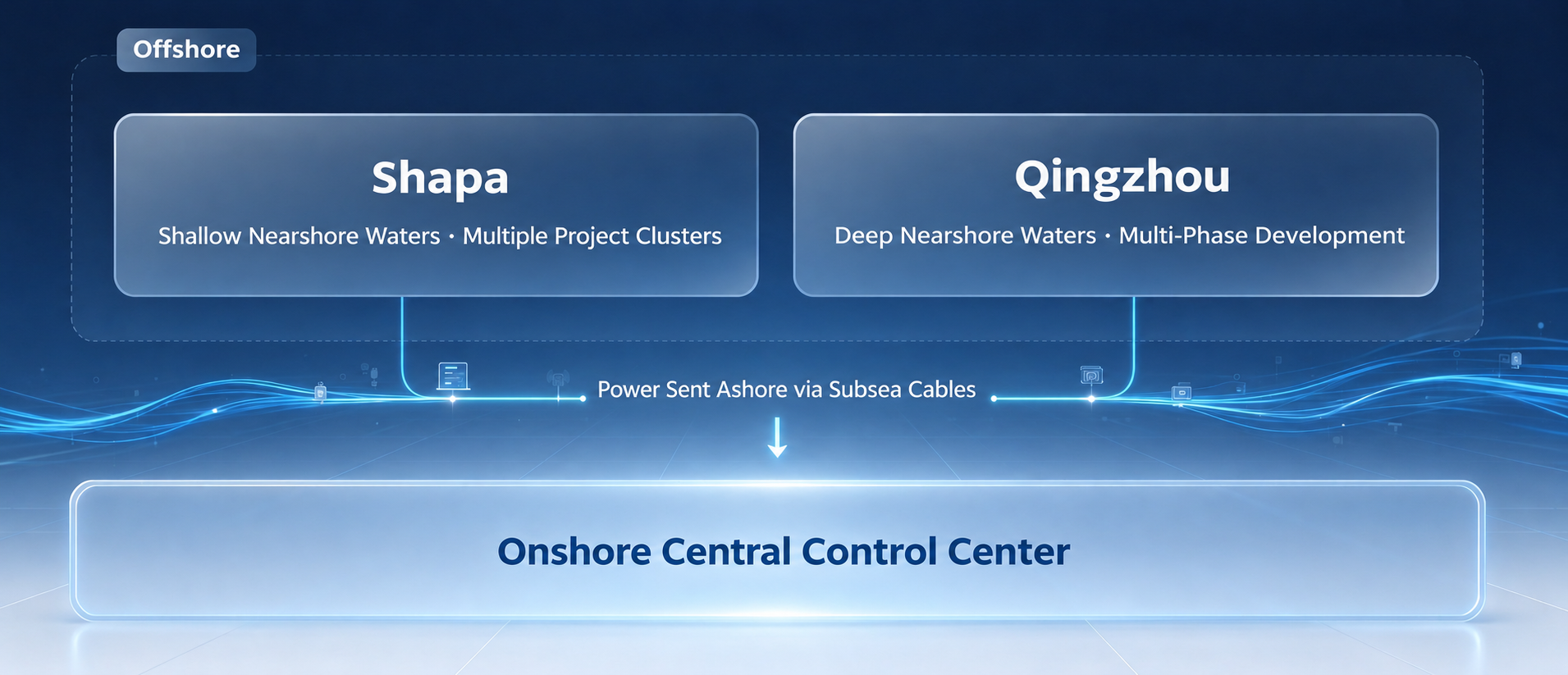
Some may ask: why does offshore wind power depend so much on such devices?
In fact, an offshore wind farm sits dozens of kilometers from shore; the power from hundreds of turbines is first collected at the offshore booster station, then sent back to land through submarine cables.
If anything goes wrong along this chain, an offshore repair trip — vessel scheduling, weather, cost — is nothing like on land.
At the moment a transformer is energized, core saturation produces magnetizing inrush current, with an amplitude several times the rated current.
Once inrush appears, protection can easily misjudge; one false trip and the entire export line has to stop.
For the operating conditions of offshore wind farms, Golead Intelligent can provide two types of equipment combinations.
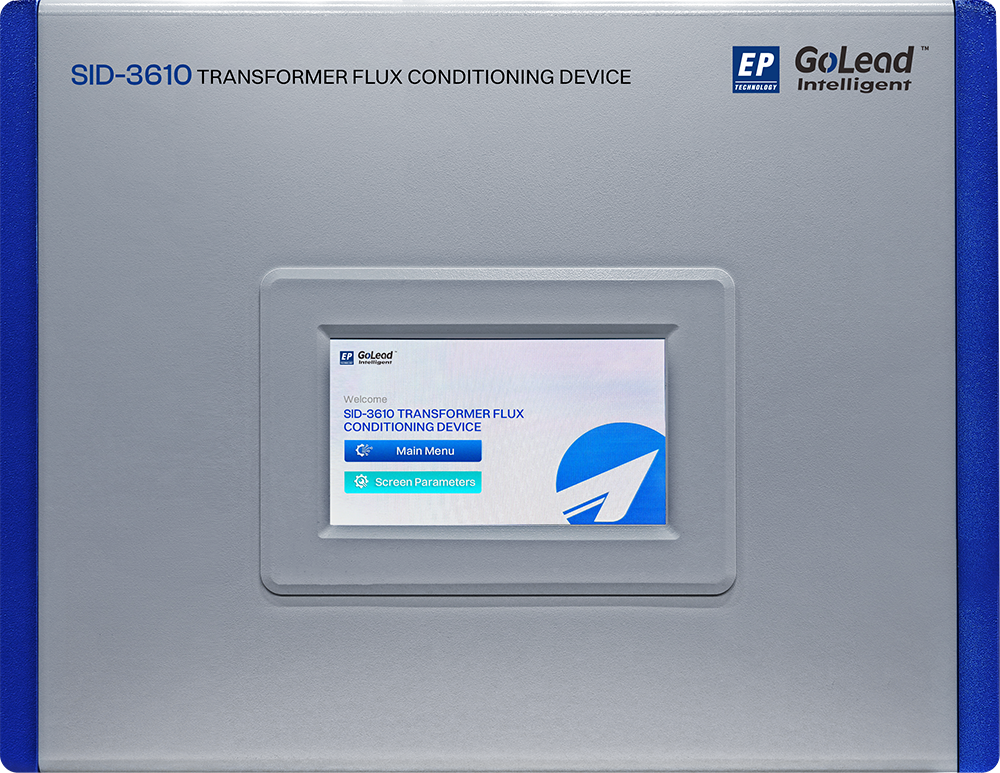
For the closing operations of the main transformers and box-type transformers at the offshore booster station, the SID-3YL microcomputer-based inrush suppressor and the SID-3610 transformer magnetizing/de-magnetizing device are configured to suppress closing inrush at its source;
for loss-of-supply transfer of station service and auxiliary power, the SID-4 series fast-transfer device is configured, completing the switch to the backup supply within milliseconds.
The former solves the energization disturbance problem; the latter solves the supply-continuity problem after a power loss.
Advantages of Phase Control & Magnetization
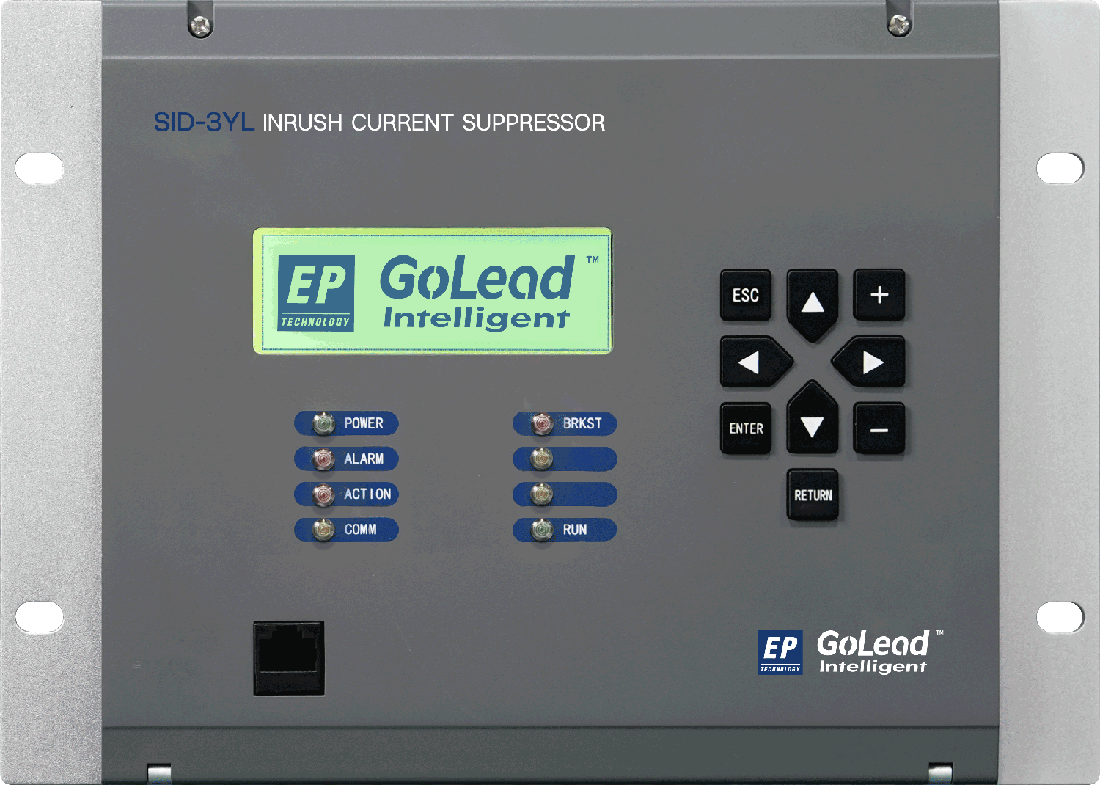
Residual magnetism measured online; closing phase set according to actual site conditions.
Conventional phase-selective closing devices act at a preset angle, yet the residual magnetism after each opening is different, so a fixed angle can hardly guarantee that the core saturation zone is avoided every time.
Golead Intelligent's device measures the transformer's residual magnetism online at the previous opening, and calculates the optimal closing phase based on the residual-magnetism condition, achieving "residual magnetism and offset flux countering each other" — forming a complete closed loop of residual-magnetism measurement, controllable offset flux, and optimal closing.
Meanwhile, Golead Intelligent's independently developed transformer magnetizing/de-magnetizing device, working with the inrush suppressor, addresses the inrush impact of a transformer's "first closing."
For newly built, long-idle or overhauled transformers, the direction of residual magnetism is unpredictable, and phase-selective closing alone cannot cover these scenarios.
With the SID-3610 transformer magnetizing/de-magnetizing device configured, the core's residual magnetism can be adjusted to the desired state before closing, reducing first-closing inrush at its source.
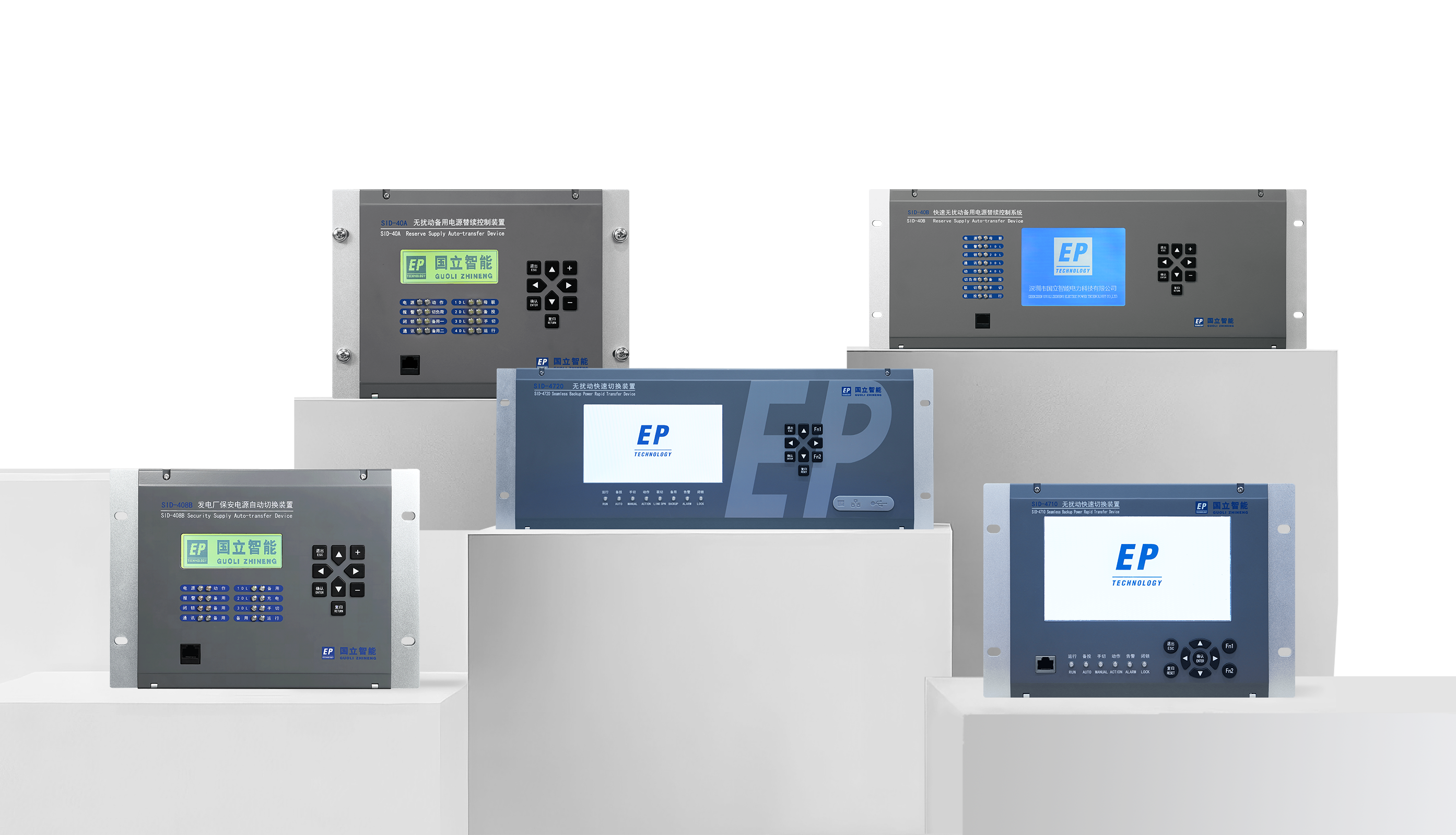
The SID-4 series fast disturbance-free transfer device is characterized by accurate transfer decisions and fast action:
It supports multiple analog quantities as starting criteria and includes in-zone fault blocking, achieving fast transfer while effectively avoiding maloperation;
It supports hierarchical fast-transfer coordination and associated tripping/closing, enabling plant-wide fast-transfer devices to act in an orderly sequence; different transfer strategies for synchronous and asynchronous machines effectively reduce impact and fluctuation during transfer;
It can complete main/backup supply transfer within milliseconds, keeping critical loads from tripping or shutting down.
For offshore wind, both combinations buy the same thing: fewer offshore repair trips, fewer shutdowns and outages.
The APEC meeting is expected to close on November 19.
When the summit disperses, out at sea off Yangjiang, the wind will keep blowing.
The wind knows nothing of summit agendas; it simply blows.
Yet every kWh it generates carries us more firmly toward the new-type power system.