Consult




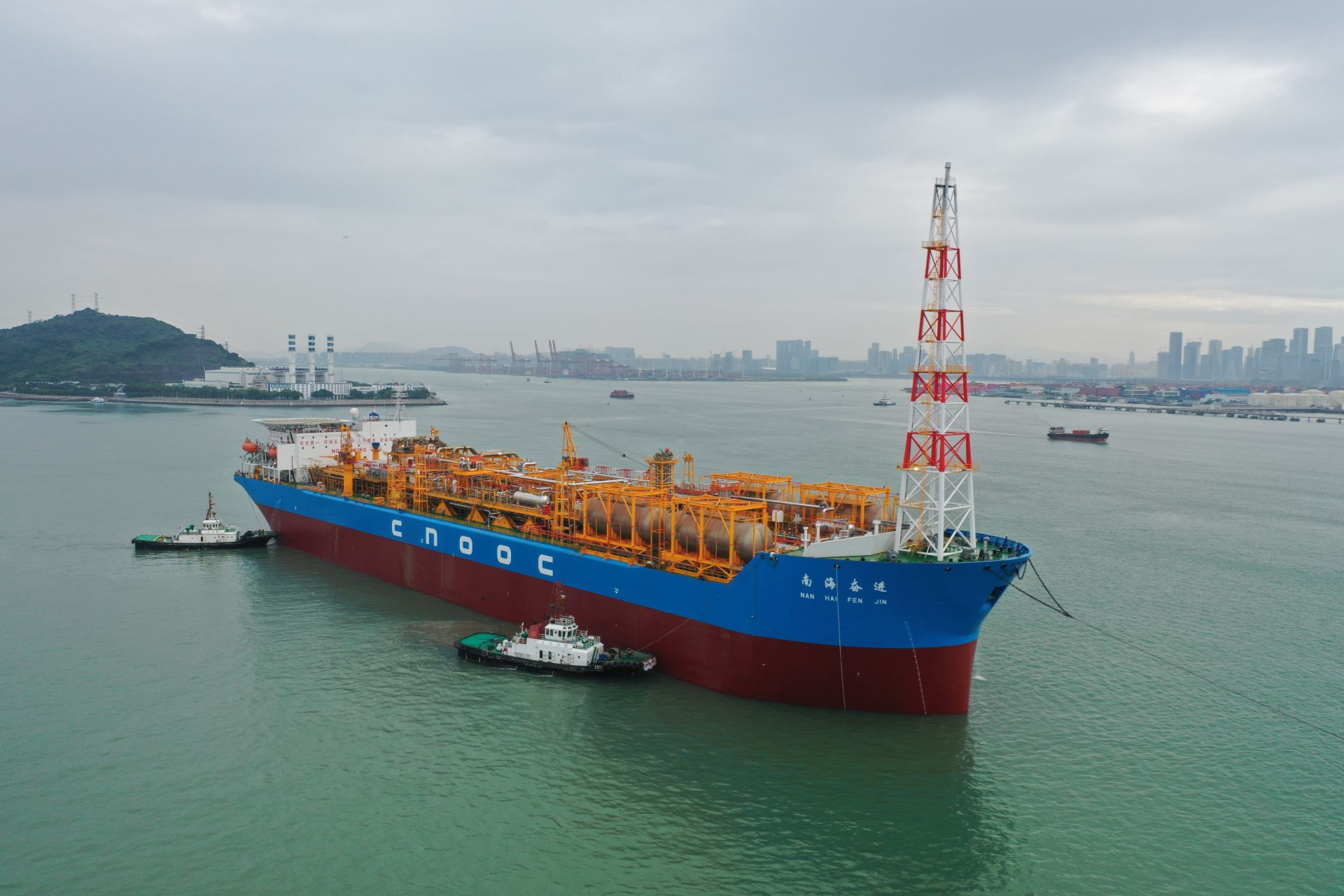
CNOOC’s FPSO “Nanhai Fenjin” (South China Sea Forging Ahead) is China’s first domestically built FPSO featuring a typhoon-relief non-disconnectable internal-turret single-point mooring system, with a total tonnage of 150,000 tonnes, an overall length of 262.2 m, a molded breadth of 46 m, and a molded depth of 24.6 m. It integrates oil and gas processing, storage and offloading, living support, and power supply functions.
Commissioned in 2002 in the western South China Sea oilfields, the FPSO was re-deployed across sea areas to the eastern South China Sea in 2022, and after completing dry-dock maintenance in September 2023, it took over production tasks for the Xijiang and Huizhou oilfield clusters, replacing the “Haiyang Shiyou 115”.
Power System Pain Points and the Innovative Solution
Original System Configuration
· Generation units: 3 gas turbine generators (single-unit capacity: 4,632 kW)
· Distribution network: 6.3 kV busbar stepped down to a 400 V system via a Dy11-connected transformer
Problems Before the Retrofit
· Excessive magnetizing inrush current: when circuit breaker VCB6 of Main Transformer No. 1 was closed, the maximum inrush current on Phase B reached 31.148 A (7.69 times the rated secondary current), tripping the generator overcurrent protection and causing frequent power-delivery failures that severely hampered oil production efficiency.
· Limitations of conventional solutions: the pre-magnetization method requires adding a small-capacity parallel magnetizing transformer or high-power wire-wound resistors, occupying precious space on the vessel; it only mitigates the transient inrush amplitude without achieving source-level suppression.
The SID-3YL Solution
· Technical principle: based on the residual-flux algorithm, the “mutual cancellation of residual flux and bias flux” technique suppresses magnetizing inrush current at its source.
· Project implementation: on April 16, 2025, the device was installed and commissioned (directly integrated into the VCB6 switchgear cubicle with zero modification of primary equipment).
· 1. Space-friendly: pure secondary equipment design significantly reduces onboard space occupation.
· 2. Improved reliability: achieved a 100% first-attempt power-delivery success rate, ensuring rapid power restoration after storms.
· 3. Economic benefits: avoided production losses caused by power-delivery failures.