Consult




Grid connection is no trivial matter — a single second is worth a fortune
In the day-to-day operation of a captive power plant, the microcomputer-based automatic synchronizing device is the "brain" that ensures the generator is safely connected to the grid. However, during actual commissioning, many operation-and-maintenance personnel often run into an awkward situation: the device is powered on, yet locked out; the parameters are correct, yet it refuses to operate; the breaker has closed, yet no record was captured.
These problems not only delay unit startup, but also hide serious safety hazards. Below, we have compiled 5 highly representative fault cases and their solutions.
Fault 1: The Device Is Locked Out as Soon as It Is Powered On, Making Grid-Connection Operation Impossible
On-Site Symptom
After maintenance was completed and power was restored, the power supply breaker of the synchronizing device was closed. The device passed self-check and then directly displayed a "Lockout" state, making any operation impossible.
In-Depth Analysis
This is a typical "jumping the gun" fault. The cause lies in the synchronizing device being powered on too early. At the moment the device is powered on, the PT (potential transformer) signals of the incoming side and the system side have not yet reached the device. Unable to detect the synchronizing voltage, the device immediately enters the lockout state to prevent maloperation.
Recommended Action
Standardize the operating procedure: after the generator has been started and voltage has been established, be sure to confirm that the incoming-side and system-side voltages have reached the synchronizing device before energizing its working power supply. Ensure that the voltage signals are present before the device logic is powered on.
Fault 2: The Device Repeatedly Issues Speed-Up Commands, but the Unit Speed Stays Motionless
On-Site Symptom
The device displays "Same-Frequency Condition" and continuously issues "Speed-Up" commands, yet the unit speed shows no change at all, so the synchronization conditions can never be met and the unit cannot connect to the grid for a long time.
In-Depth Analysis
This fault does not lie in the synchronizing device itself, but in the circuit of the actuating mechanism (governor/DEH). The command issued by the synchronizing device is a "request," not a "forced command." If the DCS or the governor side fails to receive or execute the command correctly, the device "shouts but nothing moves."
Recommended Action
Check whether the hardwired circuit from the synchronizing device to the DEH is intact and whether speed-governing authority has been granted to the synchronizing device. Confirm that the governing system permits the synchronizing device to adjust speed and can correctly execute its speed-up and speed-down commands.
Fault 3: The Grid-Connection Breaker Closes Successfully, but the Device Shows "Breaker Abnormal Lockout"
On-Site Symptom
All three grid-connection conditions (voltage, frequency, and phase) are qualified, the device issues the closing command, and grid connection succeeds — but the device interface prompts "Breaker Abnormal Lockout."
In-Depth Analysis
This is a typical loss of position feedback. After the synchronizing device issues the closing command, it monitors the auxiliary contact state of the breaker in real time. If the device issues the command but does not receive the "breaker closed" return signal within the set time, it judges the closing as failed and enters lockout, preventing repeated commands from causing large-angle grid connection.
Recommended Action
Check whether the auxiliary contact wiring inside the breaker mechanism box is loose, check whether the wiring of the auxiliary-node input terminals on the synchronizing device is loose, and check whether the feedback time of the breaker auxiliary-node signal collected by the synchronizing device is too long (e.g., routed through an extension relay). It is recommended that the auxiliary-node signal of the grid-connection breaker collected by the synchronizing device NOT pass through an extension relay.
Fault 4: All Parameters Are Normal, but the Device Keeps Showing "Ready" Without Connecting to the Grid
On-Site Symptom
The voltage difference and frequency difference are both within the normal range, and the device interface shows the ready state — but it simply does not issue the closing pulse.
In-Depth Analysis
"Everything is ready except the east wind" — and here the "east wind" is the synchronization start command. The microcomputer-based automatic synchronizing device requires an external "Start Synchronization" binary signal (usually issued by the operator through the back-end system or by manually pressing the "Start Synchronization" button). If this start signal is not received, the device merely remains in the ready state and will not perform grid-connection logic calculation or output.
Recommended Action
Check whether the "Start Synchronization" button on the back-end or local synchronizing panel has been pressed, and verify in the device's binary-input menu that the "Start Synchronization" signal transitions from open to closed.
Fault 5: Closing Succeeds but No Waveform Is Recorded, Leaving the Grid-Connection Process Untraceable
On-Site Symptom
The grid-connection process goes smoothly and the unit operates normally, but when the device records are retrieved afterwards, the waveform data of this grid connection was not recorded.
In-Depth Analysis
This is an easily overlooked power supply issue. In some synchronizing devices, power-off operations coincide with the moment of grid-connection closing; if power is cut too quickly, the device's waveform recording file cannot be saved. If the device power supply is cut off immediately after successful grid connection, the waveform file is lost before it can be saved.
Recommended Action
Ensure that the device's power supply is not cut off at the instant of grid-connection closing, and give the device enough time (usually more than 5 seconds) to save the waveform file.
What Makes Grid Connection Hard Is Not the Technology — It's the "Unexpected"
After reading these 5 cases, you will notice an interesting phenomenon: none of these problems is an algorithm error or hardware damage, yet any one of them can bring a unit of several hundred megawatts to a standstill.
This is the harsh reality of the secondary equipment site — the "correctness" in the standards often loses to the "coincidence" on site.
As a team that has been deeply engaged in the field of microcomputer-based synchronization for many years, we know this all too well. With hands-on experience accumulated from hundreds of captive power plant projects, we know better than anyone: how the device should react when a PT wire breaks, how the logic should be checked when the governor refuses to act, and what data anomalies look like when the power supply disappears.
When You Buy a Device, You Buy "Peace of Mind"
When you look for a manufacturer, you look for "someone who can actually solve the problem."
No matter how complex your on-site conditions are, no matter how "out of place" your previous device was, we are confident in bringing your unit to a smooth grid connection. Because the problems that make you scratch your head are already stored in our experience library.
As the construction of the new power system accelerates, the coordinated interaction of source, grid, load, and storage is continuously creating new application scenarios. Whether it is the flexibility retrofit of thermal power units (peak shaving and frequency regulation) or the complex grid connection of new-energy stations, all are posing unprecedented challenges to synchronization technology.
We know well that we cannot cover every site on our own. That is why we have always upheld a conviction: technology should have no barriers — safety is the ultimate destination.
Whether or not you use our equipment, if you encounter any intractable problem in power synchronization and grid connection, or if you have new technical ideas for new scenarios, you are always welcome to talk with us. We will remain open and enthusiastic, and we will use the purest technology to offer advice and help solve your problems.
Important Note: Apart from the content above, we also have mature solution deployments in the new-energy microgrid field, helping enterprises transition smoothly to the new power system:
A microgrid hybrid energy solution built on GoLead Intelligent's more than 30 years of power switching and transient inrush suppression technology, making microgrid power supply more reliable and efficient. It is specially designed for multi-energy complementary microgrids such as wind, solar, storage, and gas turbines, tackling challenges including difficult multi-source coordination, demanding grid-connected/islanded switching, complex dispatch, and high O&M thresholds, to achieve safe, efficient, and intelligent operation management and dispatch optimization.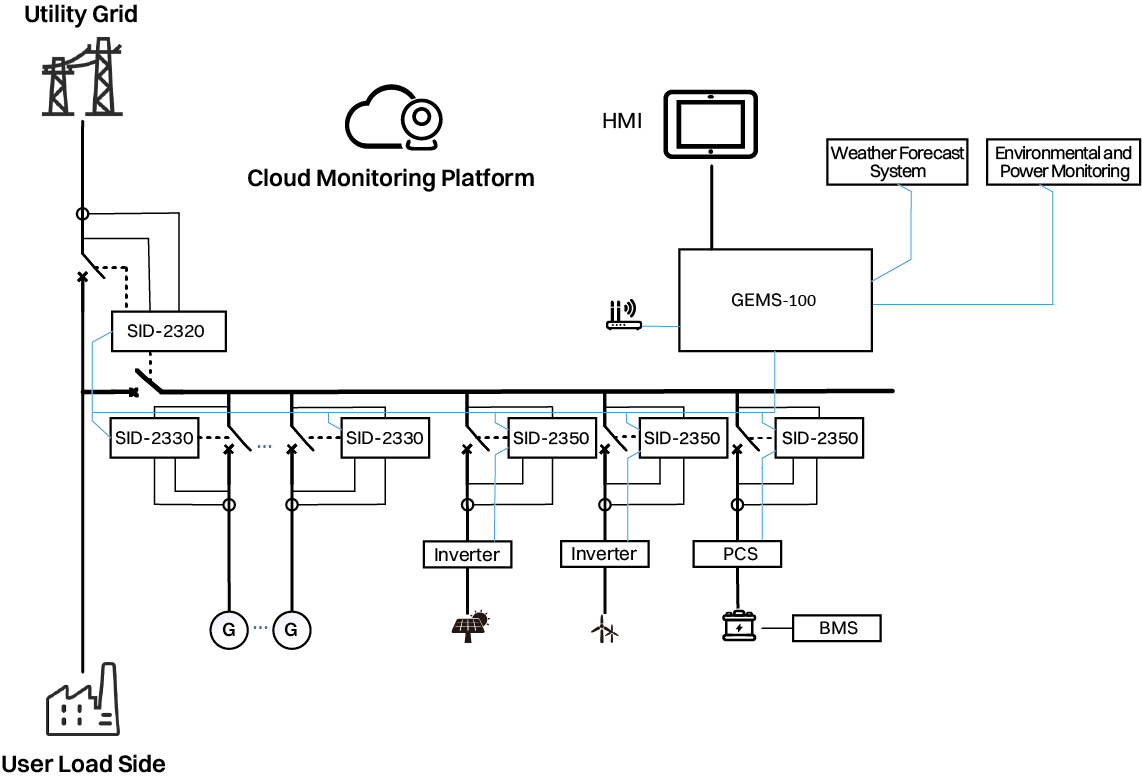
A microgrid hybrid energy management system with a hierarchical control architecture
GEMS-100 Hybrid Energy Controller
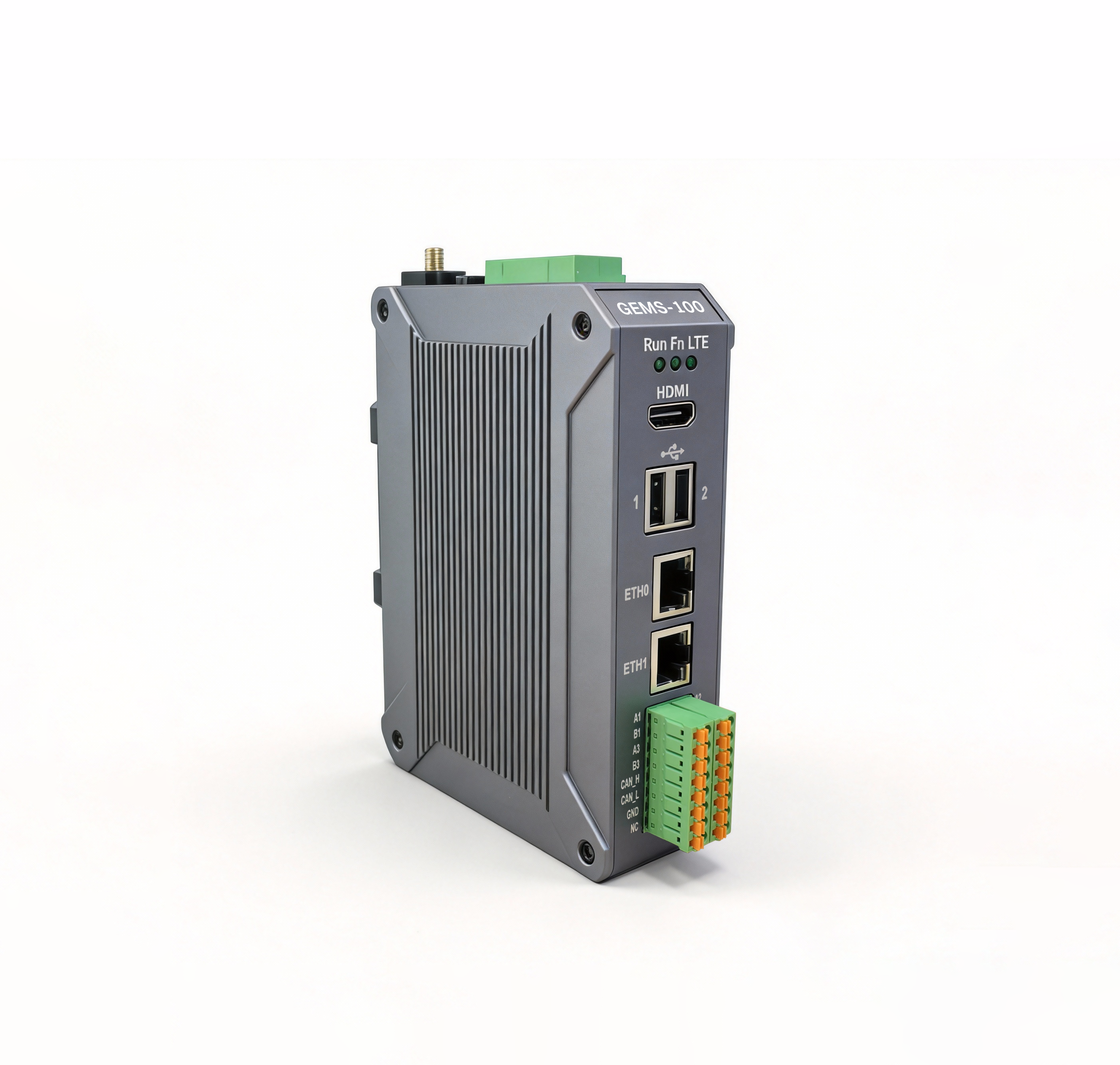
Primarily used for data acquisition, environmental monitoring, and power dispatch strategy issuance in energy systems composed of diesel or gas generator sets (referred to as "synchronous generator sets"), utility power, and various inverter-based power sources such as photovoltaic, wind, and energy storage. It can operate across a wide temperature range of -40°C to +85°C, adapting to complex environments.
SID-2300 Series Distributed Control Terminal
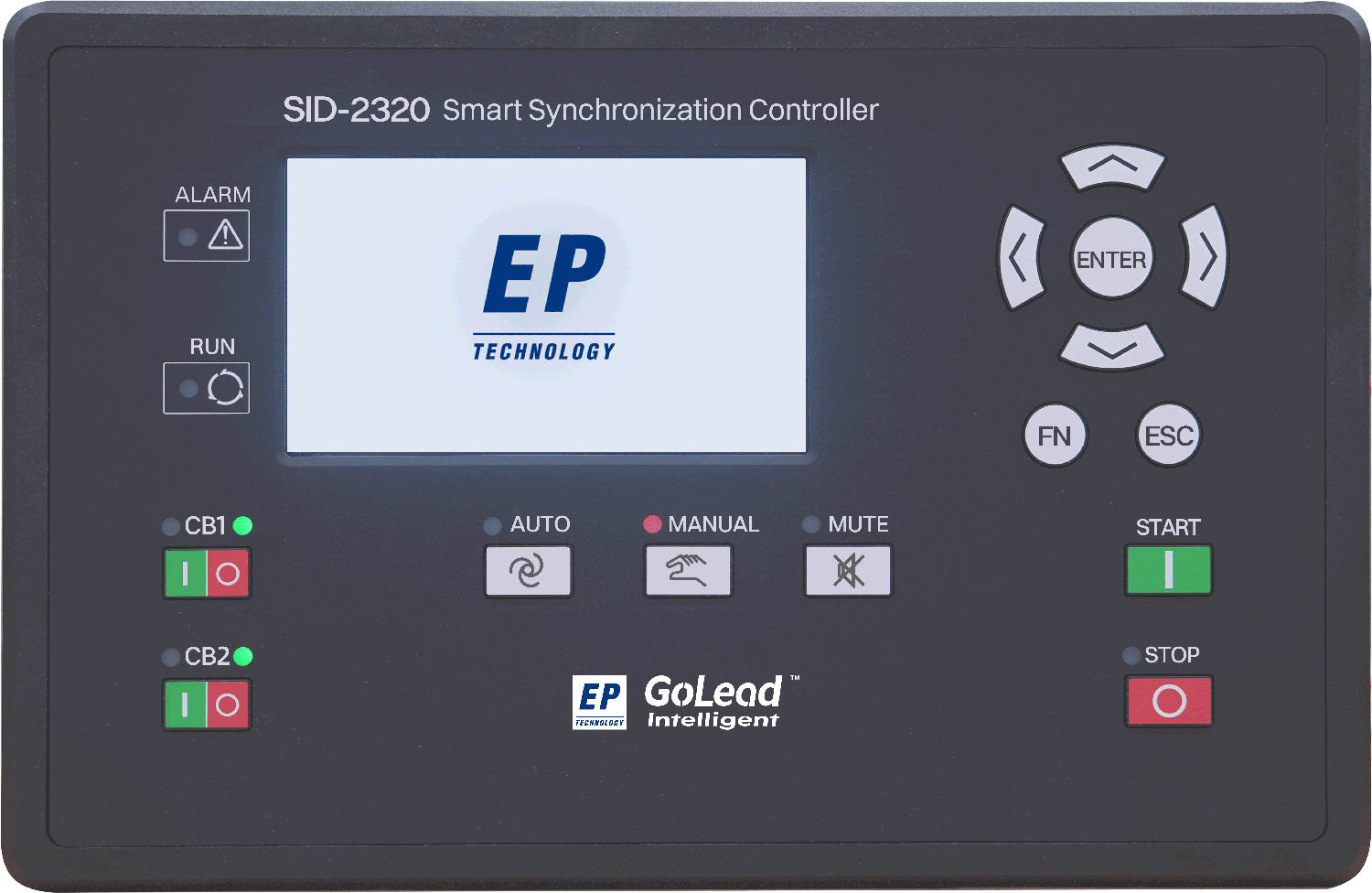
The "safety gatekeeper" for distributed power source grid connection. It flexibly adapts to diverse scenarios including standalone operation, island grid connection, and 1+N parallel operation, enabling frequency/voltage/active-power/reactive-power monitoring and regulation on the source side, seamless switching of emergency power, protection and control on both the utility side and the source side, and seamless grid-connected/islanded switching. Backed by nearly 40 years of power control technology accumulation, it safeguards safe switching control in distributed power source and grid coordination scenarios.