Consult




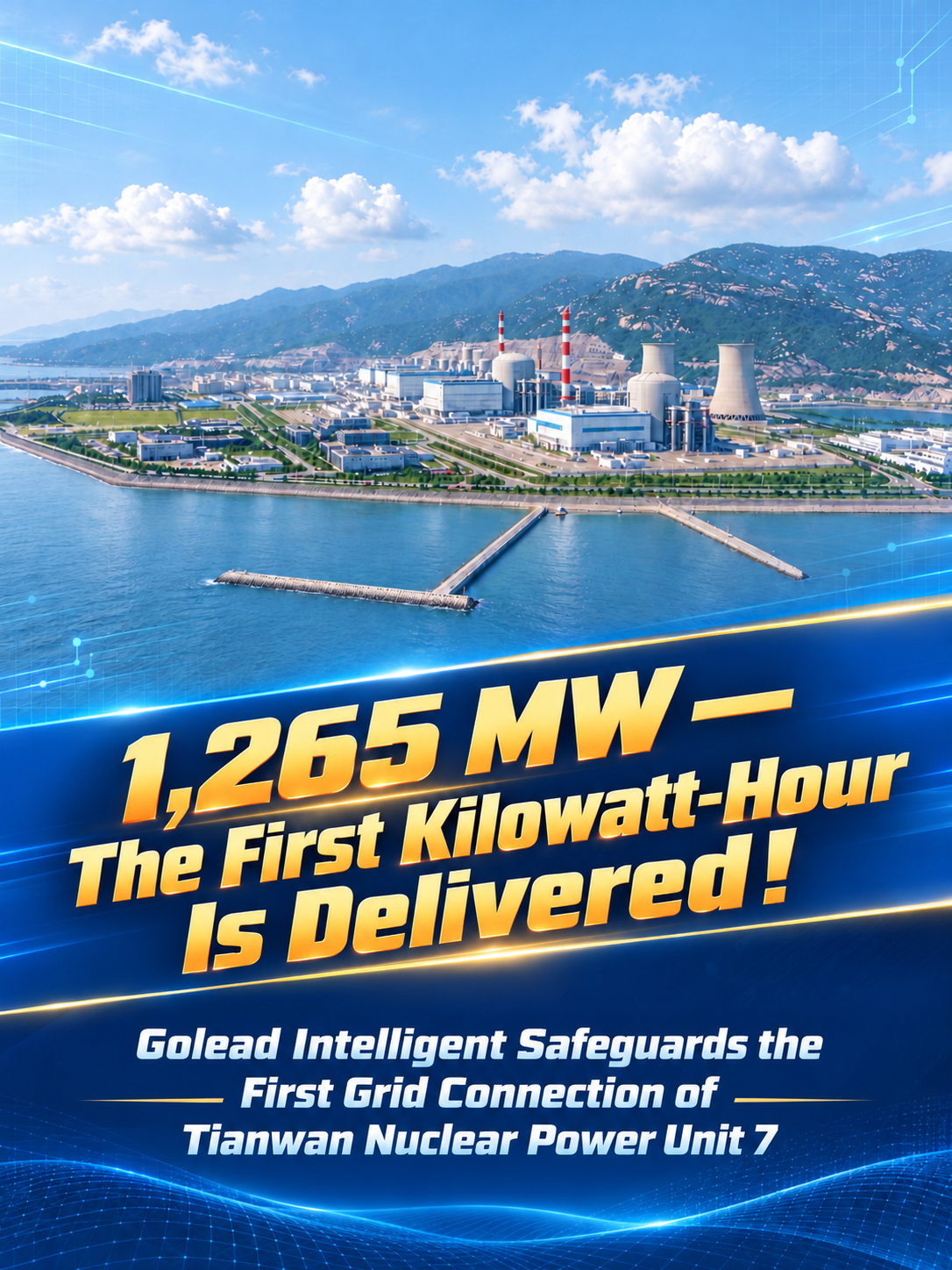
On October 8, 2026, in Lianyun District, Lianyungang, Jiangsu Province.
Unit 7 of the Tianwan Nuclear Power Plant, under CNNC (China National Nuclear Corporation), was successfully connected to the grid for the
first time, officially delivering its first kilowatt-hour of electricity to the grid. Our company provided strong support through its synchronizing,
fast bus-transfer, and inrush-current suppression systems.
This was no ordinary “switch-on.” As a “head-of-state project” witnessed by the heads of state of China and Russia via video link at its
groundbreaking, and the largest strategic cooperation project to date between the two countries in the nuclear energy field, Tianwan Unit 7
adopts Russia’s VVER-1200 Generation III nuclear power technology. It has a single-unit installed capacity of 1,265 MW, a designed service
life of 60 years, and an annual generation of nearly 10 billion kWh per unit.
Its grid connection marks the official entry of this million-kilowatt-class unit into the load-commissioning phase, laying a critical foundation
for commercial operation within the year,
while at the very moment all eyes were on the “first kilowatt-hour,” one piece of equipment completed a mission-critical task within milliseconds
— making the generator and the grid “beat in perfect time” across three dimensions: voltage, frequency, and phase.
This is called synchronization (paralleling).
And the core equipment for synchronization comes from Shenzhen.
I. Grid Connection — One of the Most “Heart-Stopping” Few Seconds in Nuclear Power
Many people think grid connection is simply “closing a switch.”
In fact, it is not.
A 1,265 MW turbine-generator set, at the instant it connects to the grid, will produce a shock current far exceeding the rated current — several times,
even tens of times greater — if there is even a slight voltage difference, frequency difference, or phase difference from the grid. What are the consequences?
The unit oscillates violently; a powerful torsional force shocks the shaft system, and in severe cases damages the shaft train or even causes it to fracture;
Grid voltage fluctuates sharply, which may trigger protection misoperation, frequency swings, or even cascading failures;
The connection between the generator and the grid becomes unstable, causing the unit to lose synchronization and trip off the line.
Therefore, grid connection is not about “closing,” but about “finding the right moment.”
It means pinpointing the instant when the voltage is equal, the frequency is the same, and the phase is aligned, then issuing the closing command within
a millisecond-level time window — that is the duty of an automatic quasi-synchronization device.
It is the last and the most precise gateway between the generator and the grid.
And nuclear power units demand a whole order of magnitude higher requirement of it.
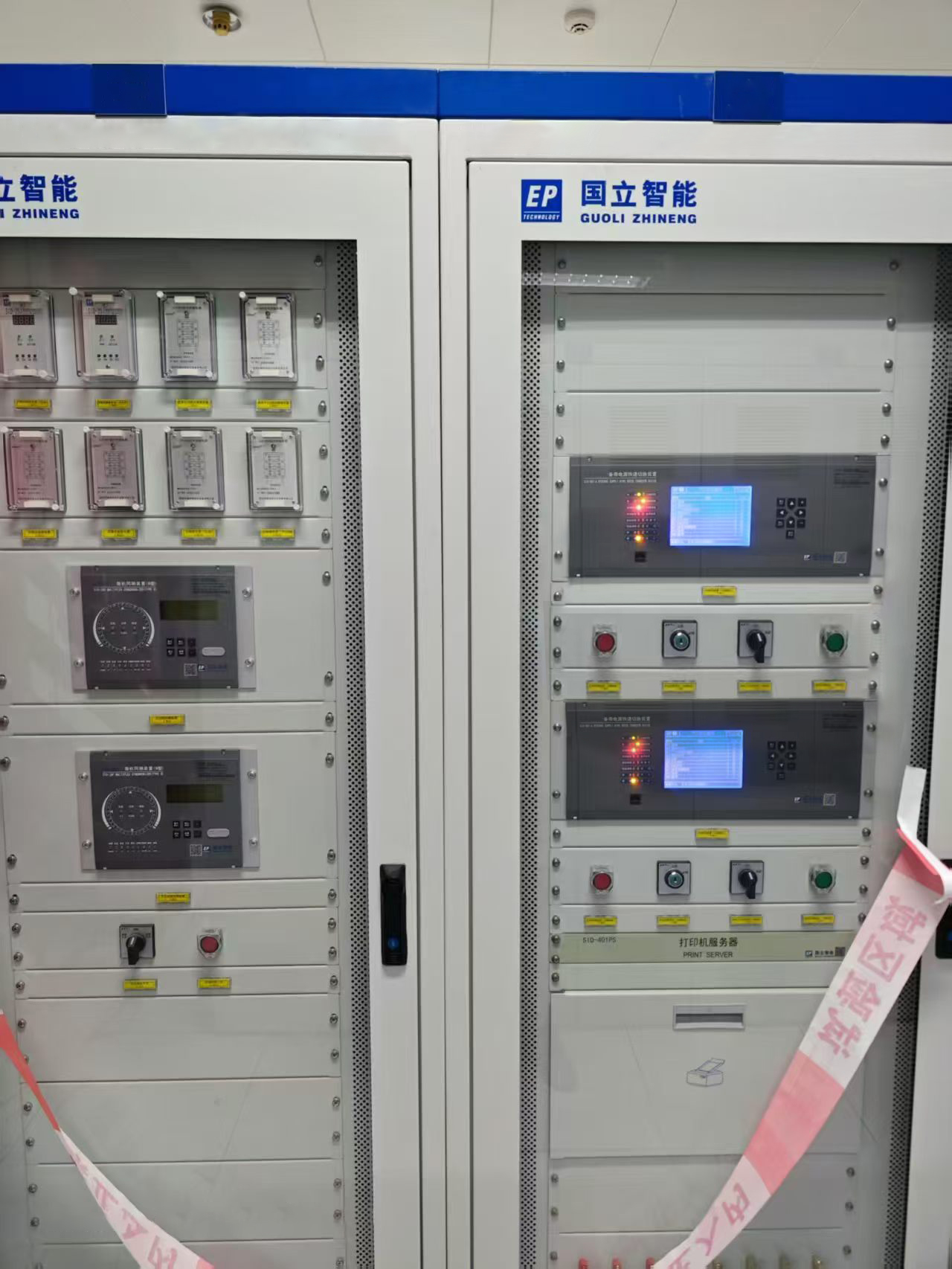
On-site views of Guolizhineng’s synchronizers and fast bus-transfer devices
II. Nuclear-Grade Reliability: No Room for Error in the Most Demanding Scenarios
A nuclear power plant’s generator synchronization system must attain an extremely high level of reliability and availability — it must reliably perform its
function whether under normal operation or accident conditions. For this reason, nuclear plant synchronization control systems generally adopt
multiple-redundancy design: even if one or more systems fail, the remaining redundant systems must continue to operate normally.
At the same time, the complexity on site at nuclear plants far exceeds that of conventional power plants:
Multiple synchronizing points: The generator may have several possible synchronizing points under different operating modes, requiring a single
synchronizer to support switching among multiple synchronizing points;
Complex operating conditions: Some synchronizing points may connect under slip-frequency conditions or under same-frequency conditions, and
must also support single-side and double-side dead-bus (no-voltage) closing;
Extremely high availability: The cost of any single misjudgment is unbearable.
To address these pain points, Guolizhineng’s solution is —
Use a synchronizing-point selector to realize point selection and switching among synchronizing points, simplifying external wiring; use the automatic
quasi-synchronizer’s self-identification of grid-connection type and self-discrimination among multiple closing modes to calmly handle various conditions
such as slip-frequency, same-frequency, and no-voltage closing; and use a software-and-hardware multiple-redundancy design to ensure the synchronizer
still works reliably under extreme conditions.
In a million-kilowatt-class pressurized-water-reactor nuclear power project, the synchronization system supplied by Guolizhineng has been operating safely
and fault-free for over a decade. The project manager commented:
“Drawing on more than 30 years of product R&D, manufacturing, and engineering-design experience, [Guolizhineng] puts forward a highly reliable
synchronization-system product solution that fits the actual production and operation needs of nuclear power plants. It is easy to commission and maintain,
convenient to operate, and its quality is trustworthy.”
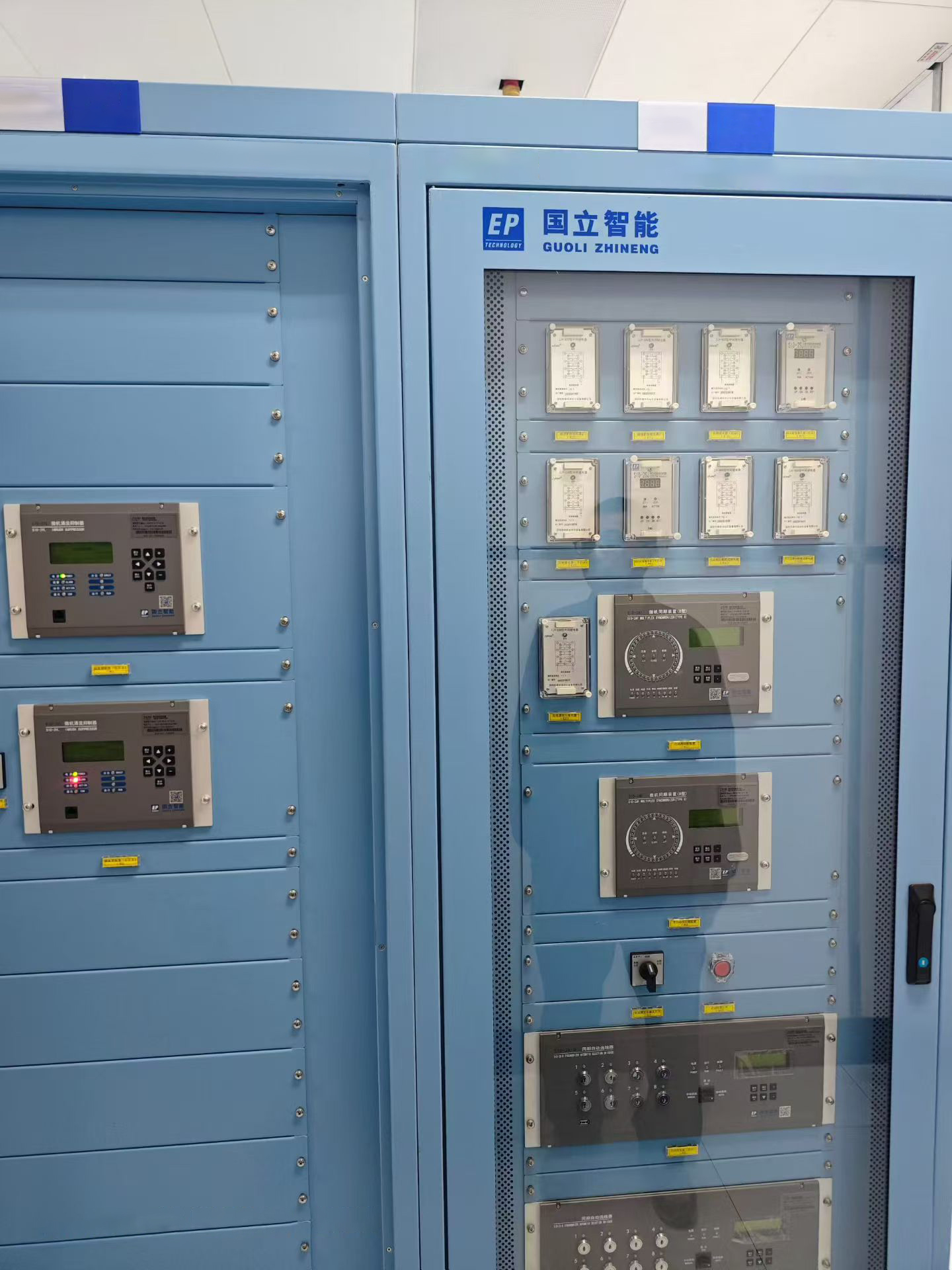
Guolizhineng’s synchronizers and phase-control devices at the switchyard
III. Four Decades Forging One “Device”: From Zero to One, and Earning Long-Term Trust in the Nuclear Power Field
Translator’s note: The original heading contains a duplicated phrase; the English translation merges it into its intended corrected form.
Going back to 1982.
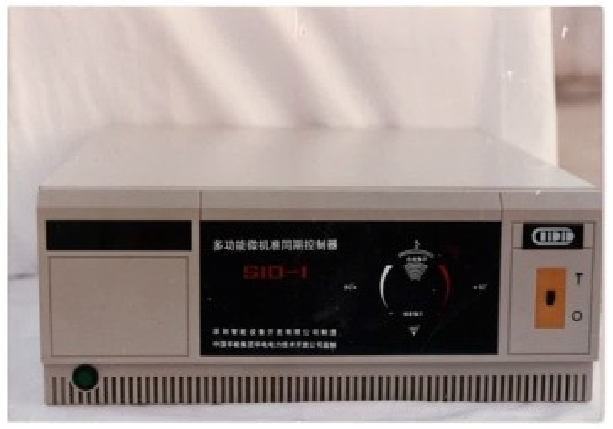
That year, Guolizhineng successfully developed and manufactured the world’s first microprocessor-based quasi-synchronizer, filling a technological gap in
the field and establishing the company’s pioneering position in power automation control.
In the four decades since, under the leadership of China’s renowned power expert Professor Ye Nianguo, the company has continuously integrated new
concepts and new technologies into product design and practice, and has successively pioneered a series of innovative products that break free from traditional constraints:
Fast bus-transfer devices incorporating the criterion of capturing the motor’s withstand-voltage point;
Inrush-current suppressors capable of calculating transformer residual magnetism online;
Circuit breakers integrating fast and intelligent phase control;
Magnetization/demagnetization devices that thoroughly solve the problem of first-closing inrush current in transformers.
From Qinshan Nuclear Power to Daya Bay Nuclear Power, from the Three Gorges Hydroelectric Station to Baowu Group, from thermal, hydro, and nuclear power to the grid,
metallurgy, petrochemicals, data centers, offshore wind, and photovoltaics — its products and services have covered more than thirty provinces, municipalities, and autonomous
regions across China, and have been exported to over fifty countries and regions worldwide.
In Closing
The Tianwan Nuclear Power Base is planned to have eight million-kilowatt-class units. Units 1–6 have already generated safely and stably more than 550 billion kWh; Unit 7 is
expected to enter commercial operation within the year; Unit 8 is scheduled to complete commercial operation in 2027.
Once all eight units are in operation, the Tianwan base’s total installed capacity will exceed 9,000 MW, with annual generation above 70 billion kWh, reducing CO₂ emissions
by 57.4 million tons every year.
From the start of Phase I construction in 1999 to Unit 7 delivering its first kilowatt-hour in 2026, over more than two decades the Tianwan Nuclear Power Base has become an
important platform for China’s nuclear power industry in importation, digestion, absorption, and re-innovation.
And we are honored to have been a participant and guardian of the “moment of grid connection” in this journey.
Congratulations to CNNC on the successful first grid connection of Tianwan Nuclear Power Unit 7!
Our tribute to every builder.
END