Consult




Commissioning Record of the SID-3YL Inrush-Current Suppressor
Key data: peak inrush current 3.41 → 0.95 times rated; unit active-power fluctuation 120 MW → 0.6 MW
Background
The 240 MVA on-load-tap-changing electric-arc-furnace transformer at a cogeneration power plant was fitted with no inrush-current suppression measures at all. On December 31, 2025 it was charged by closing five times in succession, and the operating unit repeatedly experienced large load fluctuations. During the 3rd and 4th closings in particular, the unit’s load waveform became especially violent; investigation traced the cause to excitation (magnetizing) inrush current.
The inrush-current impact produced by a transformer threatens not only the transformer body itself — the transient power swing strikes the active-power output and station-service voltage of the operating unit directly, and cogeneration heat-supply parameters fluctuate with it. If it causes protection misoperation, it can lead to major accidents such as failed closing and interrupted charging.
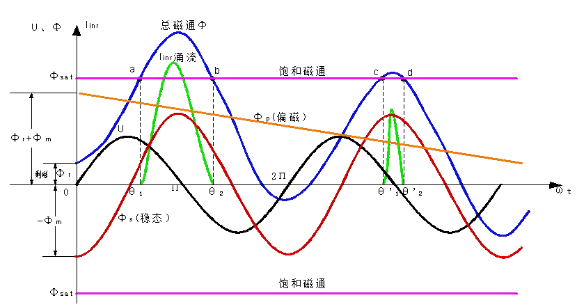
Problem: Why Is the Inrush Current Large Every Time the Transformer Is Energized?
Exciting (magnetizing) inrush current appears when a transformer is energized at no load. If residual magnetism remains in the core at the instant of closing, and the closing bias magnetism has the same polarity as the residual magnetism, the transient flux formed by the two superimposes on the steady-state flux, so the total flux inside the core usually exceeds the saturation flux — producing excitation inrush current that reaches several times the rated current. The more frequent the charging and the shorter the interval, the harder the residual magnetism is to predict.
Solution: Taming Inrush Current — the Inrush-Current Suppressor "Picks the Right Moment"
The electric-arc-furnace transformer is switched frequently, so the plant’s requirements were explicit: stable performance, reliable operation, and minimal modification. Three routes are common in the industry. The general closing-resistor method limits current by inserting a resistor; it requires an additional bypass breaker, is costly and difficult to maintain, and — because the resistor’s thermal capacity limits the number of operations — is unsuitable for frequent switching. A series reactor only "limits" rather than "eliminates" the inrush current, and being permanently connected it incurs losses and occupies space.
Phase-selective (controlled) closing, by contrast, chooses the closing instant according to the residual-magnetism angle and cancels the bias magnetism at its source. Weighing suppression performance against the scope of modification, the project ultimately chose the phase-control route, and the plant subsequently fitted our company’s SID-3YL inrush-current suppressor to the electric-arc-furnace transformer.
Its principle is not to "block" but to "choose": at opening it automatically records the core’s residual-magnetism angle, and at the next closing it selects the closing instant according to that angle, so that the closing bias magnetism and the residual magnetism cancel each other and the flux never saturates — suppressing the inrush current at its source.
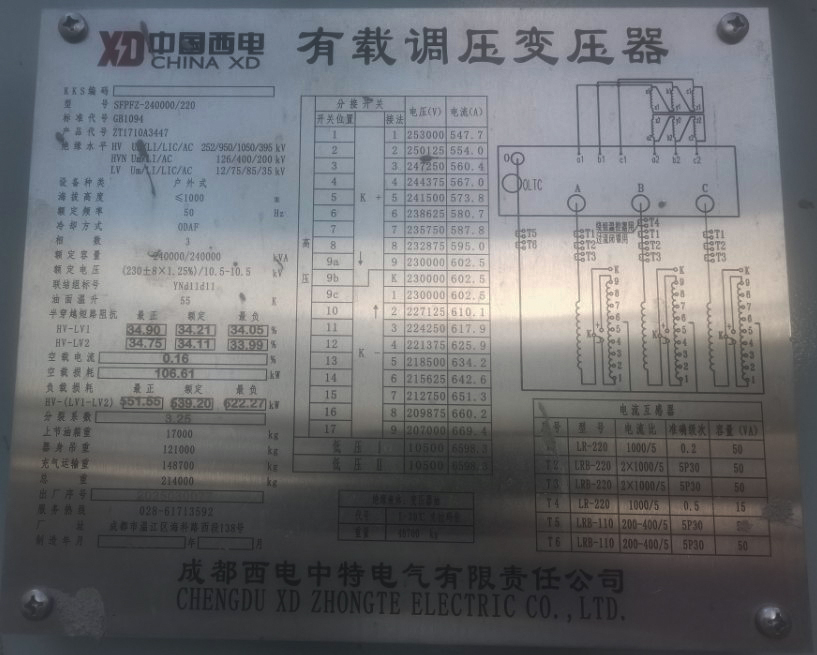
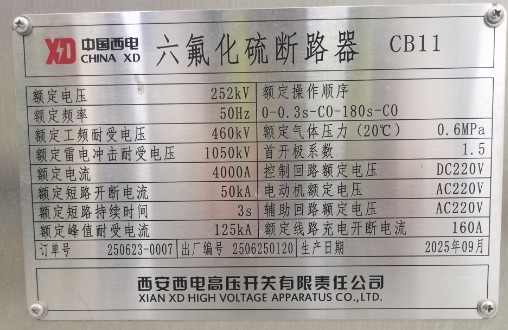
Photo: nameplates of the main transformer (240 MVA on-load-tap-changing transformer) and the breaker (CB11)
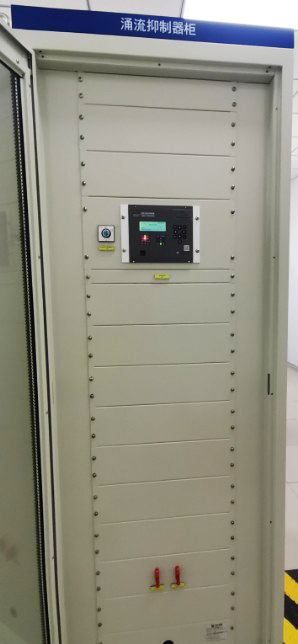
Photo: SID-3YL inrush-current suppressor panel (on site)
Data: Comparative Verification Across Three Switching Operations
On September 12, 2026, switching tests were carried out on site under real operating conditions.
The first closing was random: the phase-B inrush current surged to 7.62 A (3.41 times rated), and the active power of Unit 1 dropped and then rose again within one second, fluctuating by as much as 120 MW.
The second and third switchings used the inrush-current suppressor: the inrush current fell to 1.91 A (0.85 times rated) and 2.14 A (0.95 times rated) respectively, while the unit’s active-power fluctuation became "none" and only 0.6 MW.
Closing No. | Peak Inrush Current | Inrush Multiple | Unit 1 Active-Power Fluctuation |
1st | 7.62 A | 3.41 倍 3.41× | Dropped then rose within 1 s; fluctuation 120 MW |
2nd | 1.91A | 0.85× | No fluctuation |
3rd | 2.14A | 0.95× | Fluctuation 0.6 MW |
Note: the small difference between the phase-controlled results of the 2nd and 3rd switchings (0.85 / 0.95 times) stems from breaker closing dispersion and residual-magnetism estimation error, which is a normal phenomenon. The value of phase control lies in keeping the inrush current stably suppressed below 1× rated.
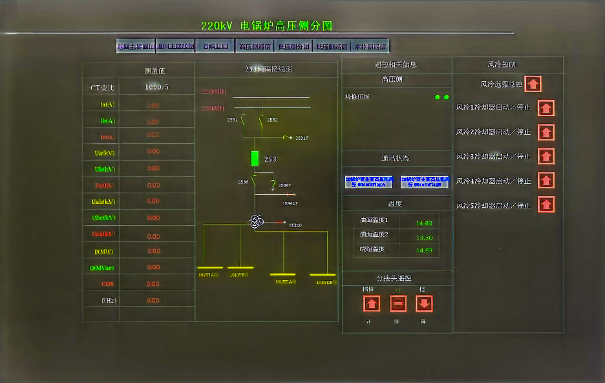
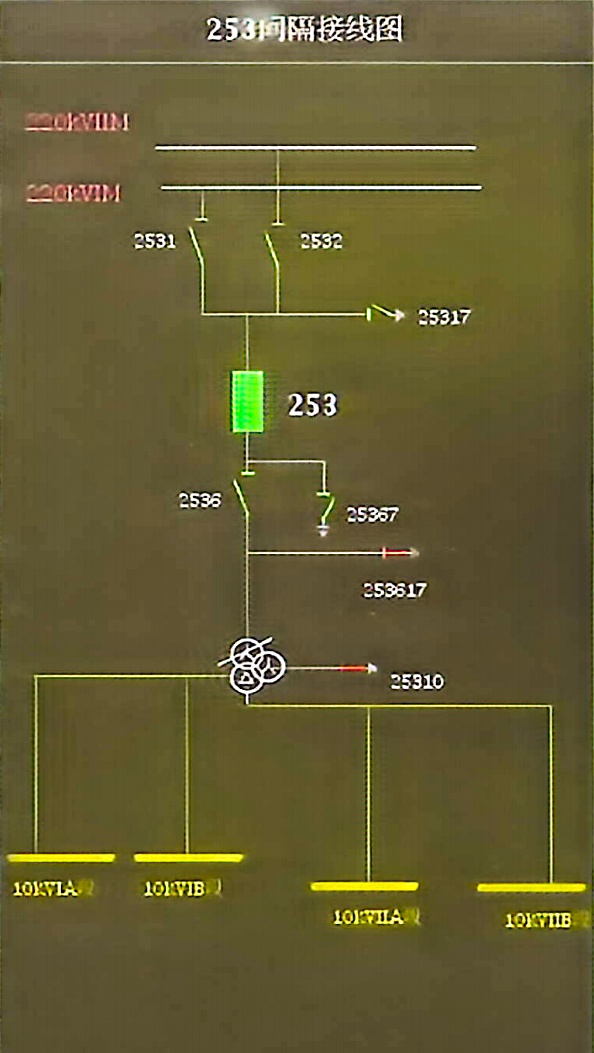
Photo: monitoring sub-diagram of the 220 kV electric-boiler high-voltage side at the plant
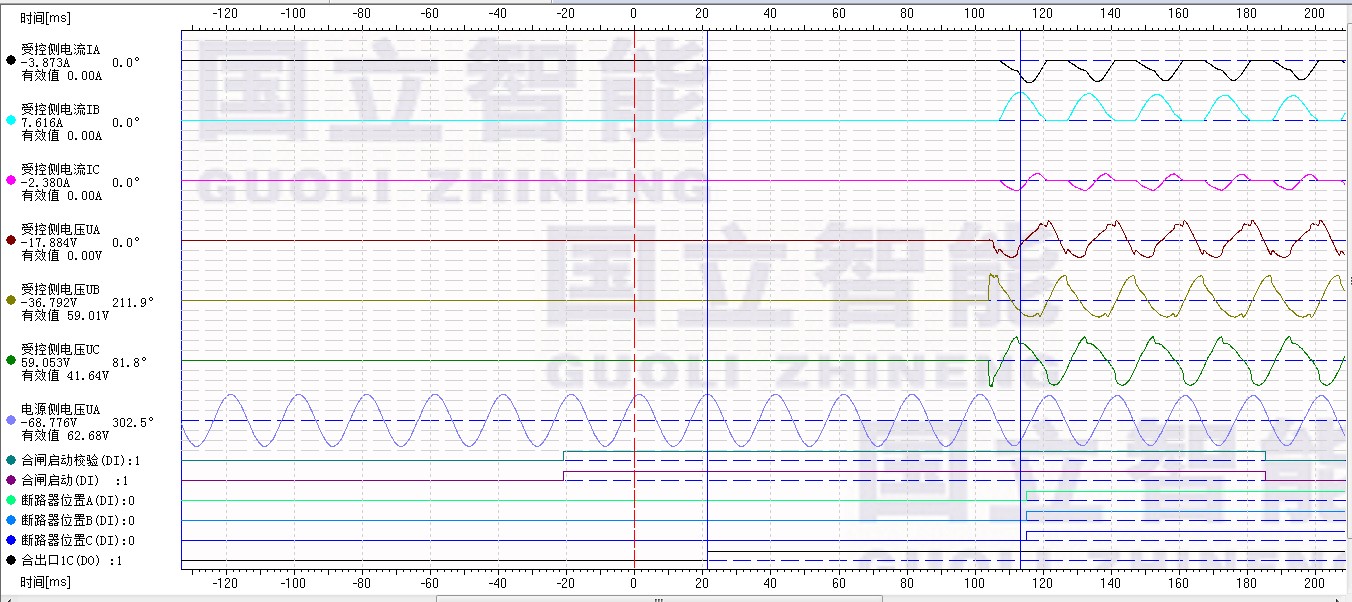
Photo: waveform record of the 1st closing — phase-B inrush current 7.62 A (3.41 times)
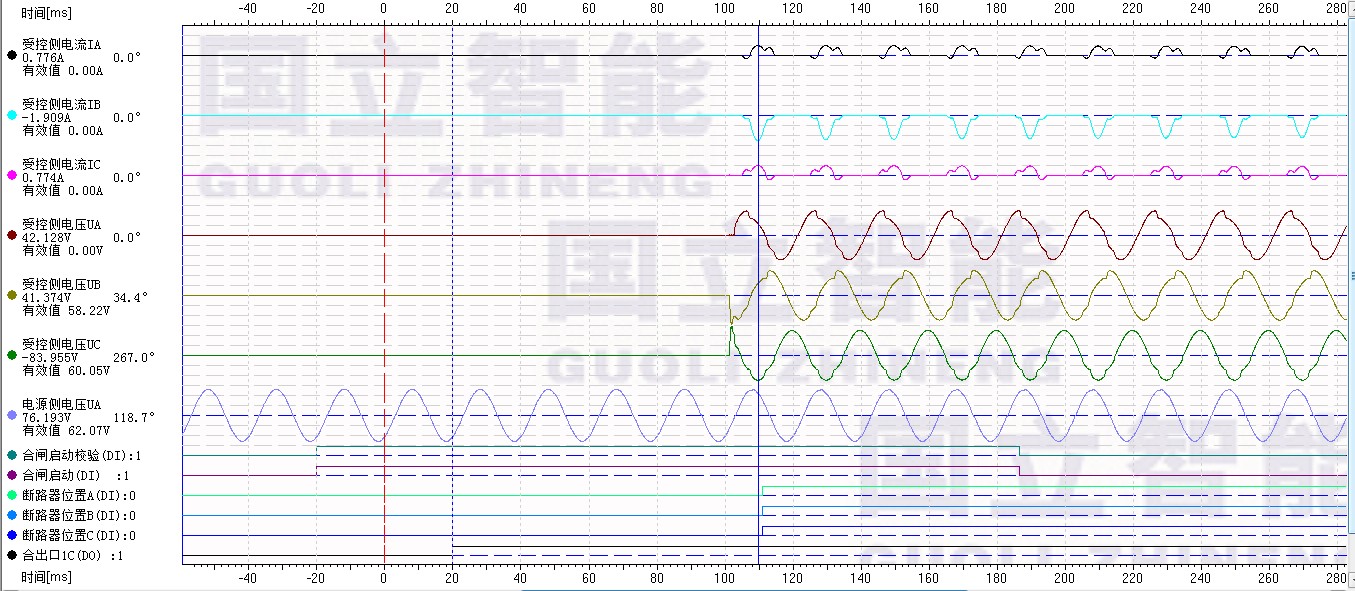
Photo: waveform record of the 2nd closing — phase-B inrush current 1.91 A (0.85 times)
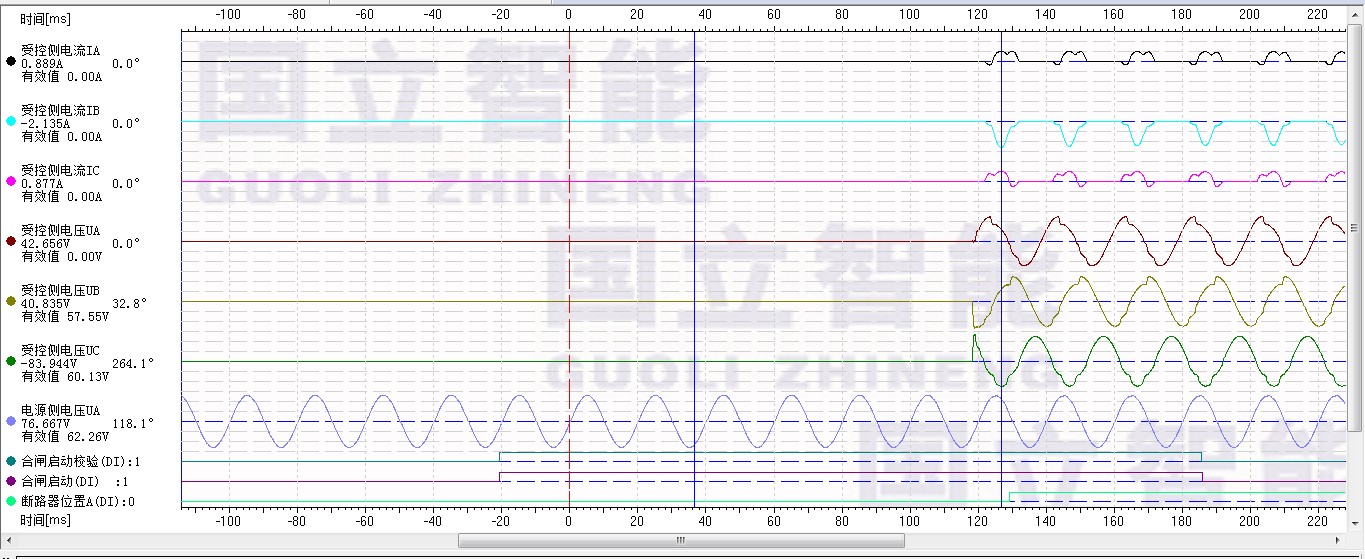
Photo: waveform record of the 3rd closing — phase-B inrush current 2.14 A (0.95 times)
Results and Takeaways
Excitation inrush current fell from 3.41 times to 0.95 times, and the unit’s power disturbance from 120 MW to 0.6 MW — Guolizhineng’s inrush-current suppressor turned a breathtaking energization into a smooth operation.
Before energizing equipment such as electric thermal storage, electric boilers, and large transformers, have you also encountered repeated failures to energize them?
If your project also runs into charging inrush-current issues with an electric-arc-furnace transformer, or you would like to assess the inrush-current risk of transformers in your substation,
Don’t hesitate to drop us an email to start the conversation.
END