Consult




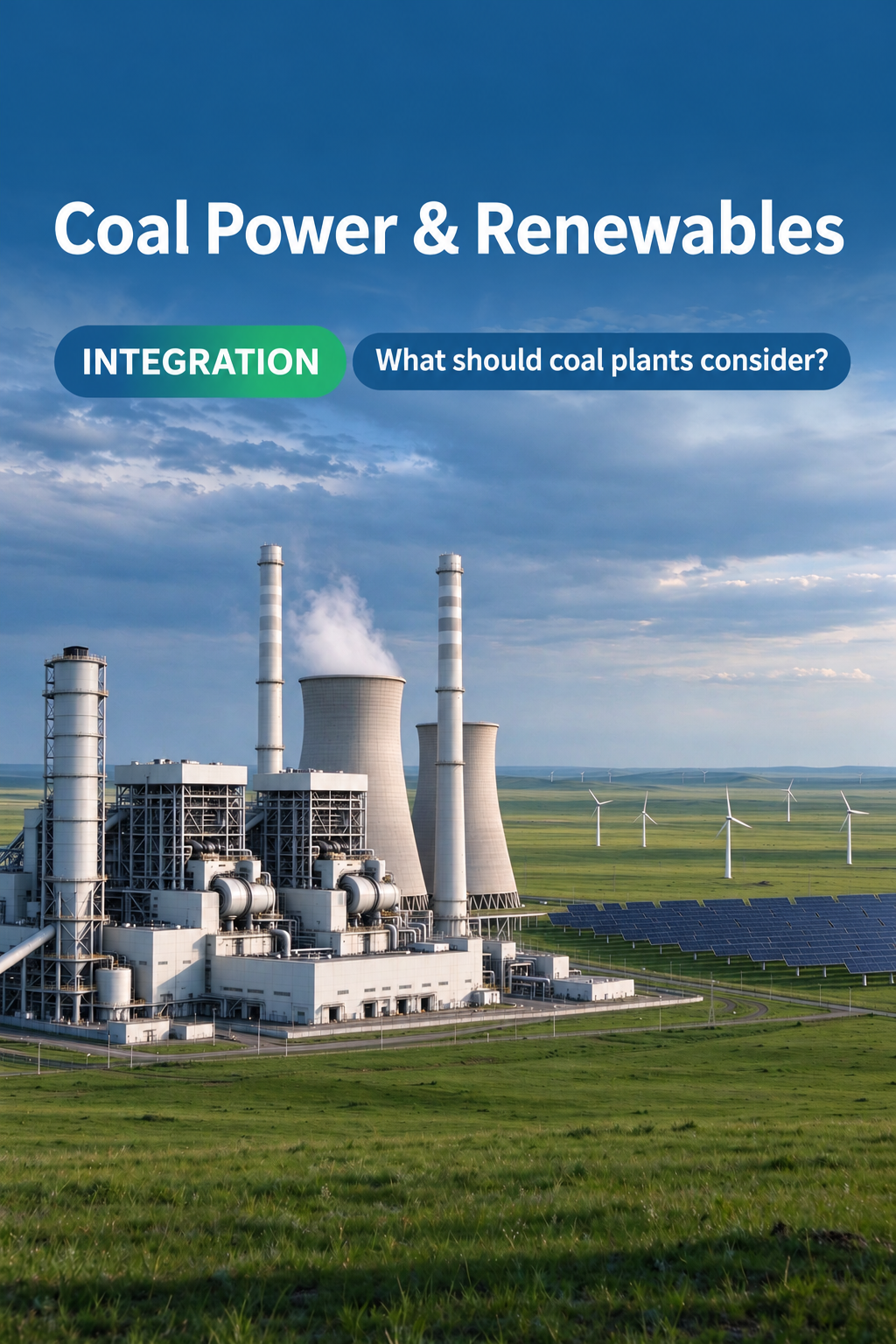
At the end of September this year, the National Energy Administration issued a document, the Implementation Opinions on Promoting the Integrated Development of Coal Power and New Energy.
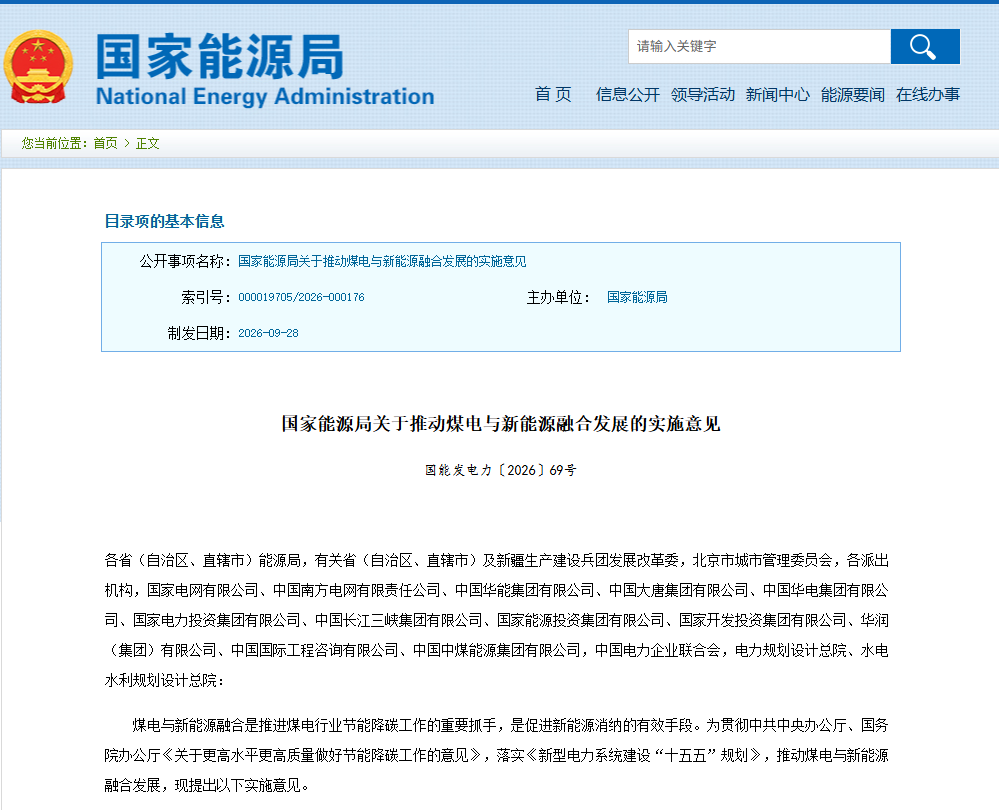
As soon as the news came out, the internet quickly got buzzing.
Media outlets, institutions, and experts have been publishing interpretations one after another, mostly about: why integration is needed, what it means for the dual-carbon goals, and how the industry landscape will change.
These are certainly important.
But as the core player in all this, what should coal-power enterprises consider when facing this major document?
Let us first talk about what this document is actually about.
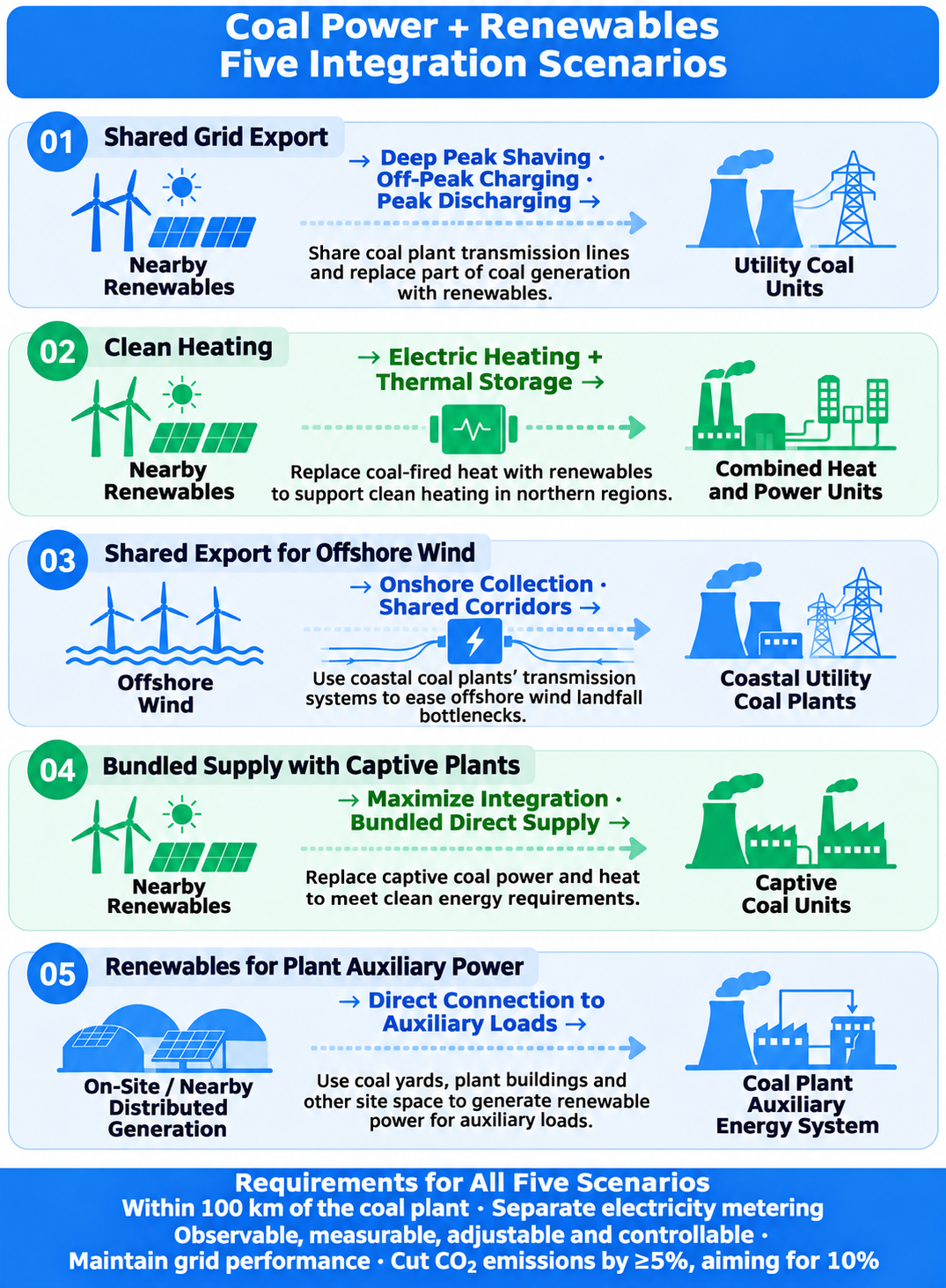
It wants coal power and new energy to team up: new energy is connected nearby to a coal power plant and sent out through the plant's transmission lines; new energy within or near the plant area can also be connected directly into the plant's auxiliary power system.
The document lists five typical scenarios and puts forward a host of technical requirements - the content is nothing if not rich.
But for coal power, what really deserves attention are a few matters directly related to itself.
➜ First, the distance:
The document sets a threshold: the new energy site should be no more than 100 kilometers from the coal power plant in a straight line, in principle.
Beyond that, it basically cannot be connected.
If you want to take part, first check whether there are resources that close around your plant.
➜ Next, how much can be connected:
New energy is not something you can connect as much as you wish.
The document requires that the scale of connection match the regulation capability improved by the unit retrofit.
In other words, only when the unit can regulate deeply and free up enough space can we talk about how much new energy to connect.
To connect more, you must first build up the peak-shaving capability.
➜ Also, the accounts must be worked out clearly:
The document contains several items directly related to revenue:
Curtailed electricity from new energy in integrated projects is not included in the utilization-rate assessment;
Eligible projects receive central government funding subsidies;
They can also participate in electricity market and carbon market trading.
All of these bear on the economics of integration and matter a great deal to whether the project's books balance.
➜ There are also several hard technical requirements:
For example, coal power and new energy must be metered separately with boundary meters installed, and the interfaces and fees with the public grid must be clearly delineated.
These are things that must be settled at the early stage; putting them off tends to cause disputes later.
So much for the direction. When it comes to implementation, there is one link that cannot be avoided - the auxiliary (station service) power.
Once new energy is connected into the plant, the power supply is no longer just the original single source; it becomes multiple sources, and power may even flow in reverse.
Much of the original switching logic and protection configuration has to be revised accordingly.
As long as new energy enters the plant area, this hurdle has to be crossed sooner or later.
And this kind of auxiliary-power work is something we have long been doing.
One power-plant customer came to us specifically to ask: with PV and energy storage connected to the auxiliary power, should the fast transfer still follow the old rules? When designing solutions, such questions keep coming up. The hard part is often not installing the equipment, but the moment of switching - how to set the criteria for multiple power sources, under what conditions blocking is mandatory, and how to prevent out-of-synchronism closing; the settings and logic must all be tuned to the new source structure.
When designing a solution for another power plant, with PV, storage, and auxiliary power placed side by side, Golead Intelligent's EMS reserved a dedicated linkage interface for fast transfer. Which source goes first and when closing is not allowed can be easily accomplished through the system and strategy.

This solution breaks down into four parts:
The EMS manages new energy as a whole, keeping watch over PV, wind power, energy storage, and auxiliary power, and deciding when to use which;
The coordination controller manages the safe and stable control of new energy and grid-connection/off-grid switching - how to switch between grid-connected and off-grid modes and how to transition, for distributed sources and auxiliary power alike, is coordinated by it;
Further down, the power source terminal controller keeps equipment such as emergency generators and energy storage running smoothly and continuously.
On site, it roughly works like this:
PV is generating, storage is charging and discharging, and auxiliary power serves as the backstop - with several power sources side by side, which goes first, which goes later, and under what circumstances closing is not allowed are judged by the system itself through strategy, without anyone having to watch it all the time.
Even if one power source fails, the system can quickly switch to the safe one.
Golead Intelligent has been deeply engaged in the engineering application of synchronous grid connection for large generating units and fast switching of auxiliary power for nearly 40 years, and has accumulated rich engineering experience in the field of safe power source switching control.
If your plant is considering an integrated retrofit, or needs to connect PV or energy storage to the auxiliary power,
feel free to talk to us first - we will tailor a professional integrated energy management solution for you.